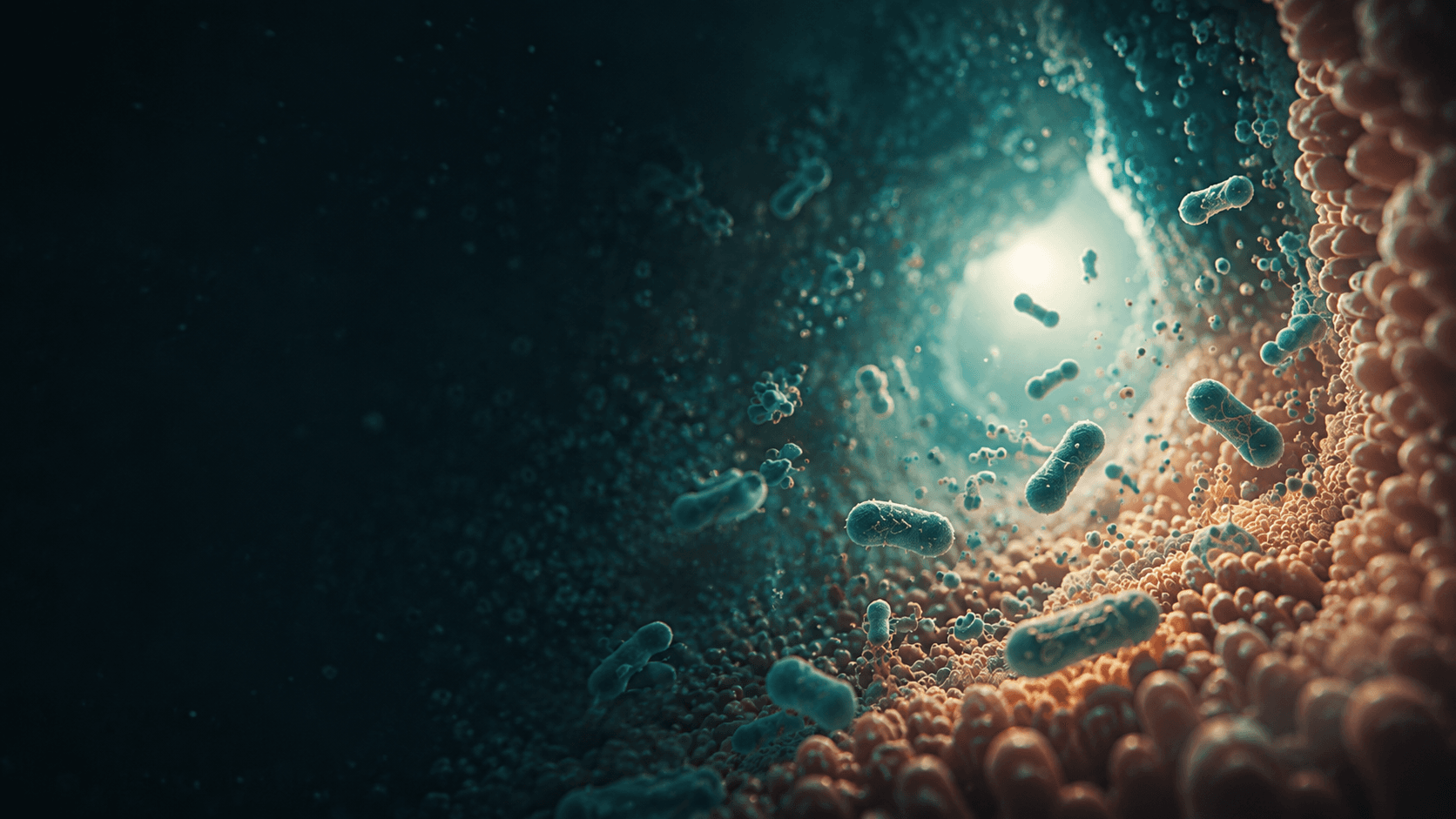
The invisible world that shapes us.
Trillions of microorganisms live in and on us — about as many cells as our own, carrying a hundred times more genes. This is the plain guide: what they are, what they actually do, and where the science stops and the marketing starts.
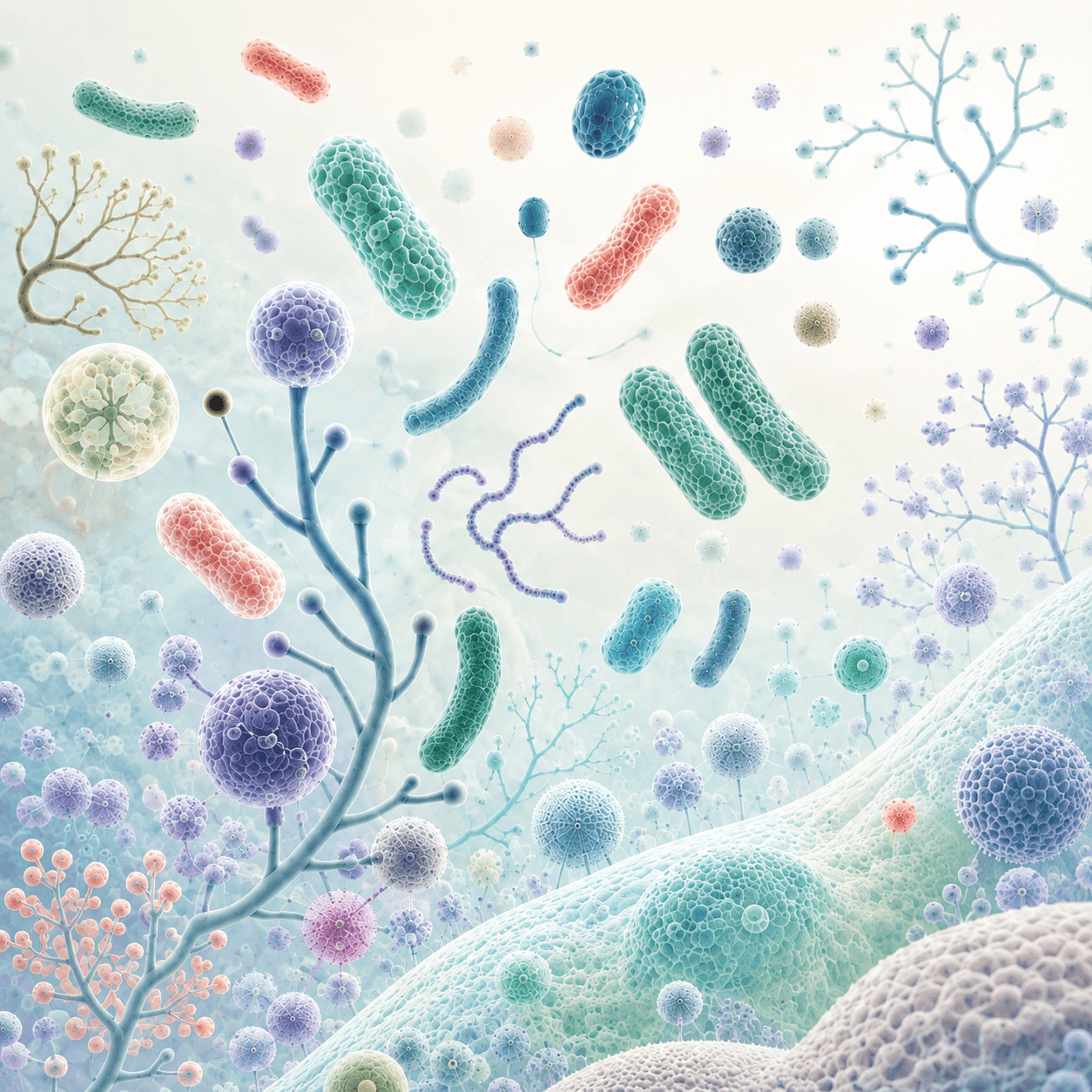
A community, not a mascot.
The microbiome is a community of trillions of microorganisms — mostly bacteria, but also viruses, fungi, and archaea — living along the digestive tract and densest in the colon. The microbiota are the organisms; the microbiome is those organisms plus their genes and chemistry.
The scale is strange: about as many bacterial cells as human ones — not the "ten times more" that circulated for decades — yet together they carry roughly 150 times more genes than the human genome.

Seeded at birth, shaped by life.
The community assembles from day one — seeded during birth and early feeding, even marked by the mode of delivery — then shaped by diet, environment, genes, and drugs across a lifetime.
There is no single "healthy" microbiome to aim for. Two well people can carry very different communities and both be fine, which is exactly why a one-size target should raise an eyebrow.
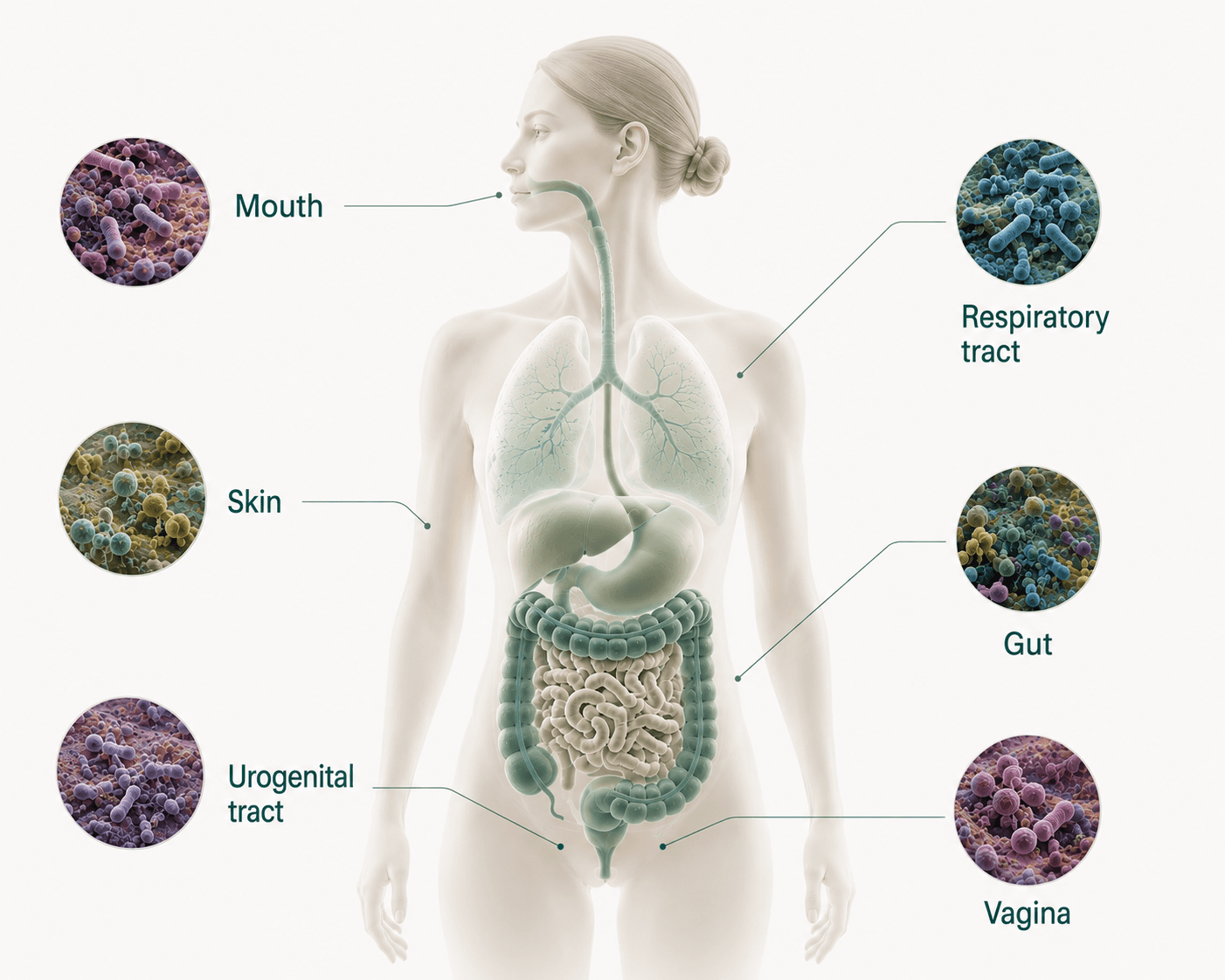
Mostly the colon — but not only.
Density peaks in the large intestine, where bacterial numbers are among the highest found anywhere in biology. But distinct communities line the mouth, skin, airway, and elsewhere — each its own ecosystem, tuned to its patch of the body.
The part that holds up.
Strip away the hype and a solid core remains. Gut bacteria ferment fibre into short-chain fatty acids that fuel the colon lining; they crowd out invaders; they school the immune system; and they make vitamins K and B. Germ-free mice, raised with no microbes at all, need about 30% more food to hold the same weight — the work is real.
Travels with, not causes.
An off-balance community — "dysbiosis" — keeps company with a long list of conditions, from inflammatory bowel disease to metabolic disease. But the wording matters: travels with, not causes. Most human evidence is correlation, and a disturbed gut can be the consequence of a disease as easily as its cause.
Promising, and easily oversold.
The frontier is real — faecal transplants, precision nutrition, tailored probiotics — but early. Treat the established functions as real, the disease associations as leads rather than diagnoses, and the consumer market as running well ahead of the data. Feed the part that's understood before buying the part that isn't.
Every claim, graded.
No reference articles published yet.